
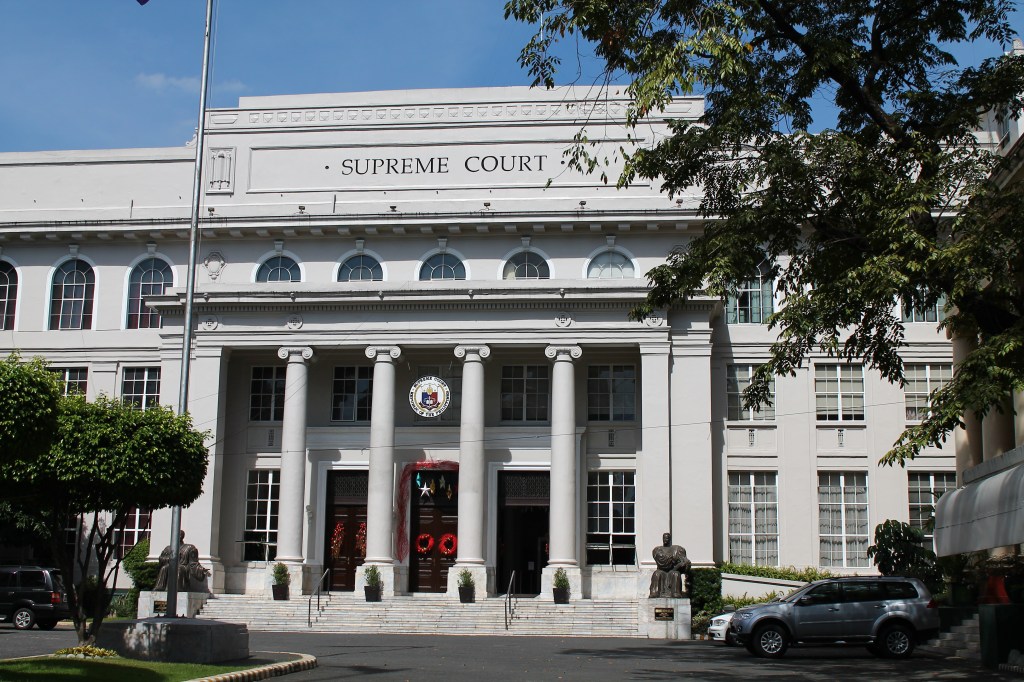
MANILA— The Supreme Court (SC) has ruled that the Office of the Ombudsman may independently investigate public officials even if the Commission on Audit (COA) is conducting a separate inquiry involving the same transactions.
In a decision written by Associate Justice Maria Filomena D. Singh, the SC en banc upheld the administrative liability of Ronelo O. Del Socorro and several other former officials of the Provincial Government of Palawan over irregularities in the use of the province’s share in the Malampaya Fund.
The cases stemmed from the release of ₱2.572 billion from the fund for development projects in Palawan, of which ₱966 million was allocated to the province for electrification, healthcare, education, and infrastructure initiatives.
Following a COA special audit, four administrative complaints were filed before the Ombudsman over alleged irregularities in the procurement and implementation of the projects.
The complaints cited inadequate publication and posting of invitations to bid, improper evaluation of bidders’ eligibility, and the awarding of contracts despite incomplete requirements. They also alleged that the same personnel were assigned to multiple projects with overlapping schedules, disbursement documents were incomplete, and accomplishment reports overstated project progress, resulting in payments to contractors.
The Ombudsman found the officials administratively liable for grave misconduct, serious dishonesty, and gross neglect of duty. The Court of Appeals affirmed the ruling.
The officials challenged the decisions before the SC, arguing that the Ombudsman’s investigation was premature because the COA audit findings had not yet become final. They also cited a subsequent COA decision ordering a review of certain projects and an assessment of some officials’ liability.
The SC rejected their arguments, emphasizing that the Constitution and Republic Act No. 6770, or The Ombudsman Act of 1989, authorize the Ombudsman to investigate acts or omissions of public officials that appear illegal, unjust, improper, or inefficient.
The court explained that the Ombudsman and the COA exercise separate and independent powers. While the COA audits government funds and transactions, the Ombudsman investigates possible wrongdoing by public officials. COA findings may assist the Ombudsman but do not bind it.
“The Office of the Ombudsman is not required to wait for the finality of any audit or investigation by the COA before it can investigate unlawful and improper acts of public officials on its own,” the SC stressed.
Otherwise, the court said, the Ombudsman’s “investigatory powers would be severely diluted if the finality of a COA Audit Report would be considered as a suspensive condition before it could finally conduct an investigation.”
The SC also found that the Ombudsman did not rely solely on the COA audit report. It independently assessed the complaints and supporting evidence, including bidding records, contracts, inspection reports, resolutions of the Bids and Awards Committee, and other relevant documents.
It further ruled that the subsequent COA decision did not render the administrative cases moot, as the Ombudsman had based its findings on its own investigation and evaluation of the evidence. Even a COA outcome favorable to the officials would not automatically affect the resolution of the administrative cases.
The former officials were dismissed from service and perpetually disqualified from holding public office. Their retirement benefits were also forfeited.





Leave a Reply