
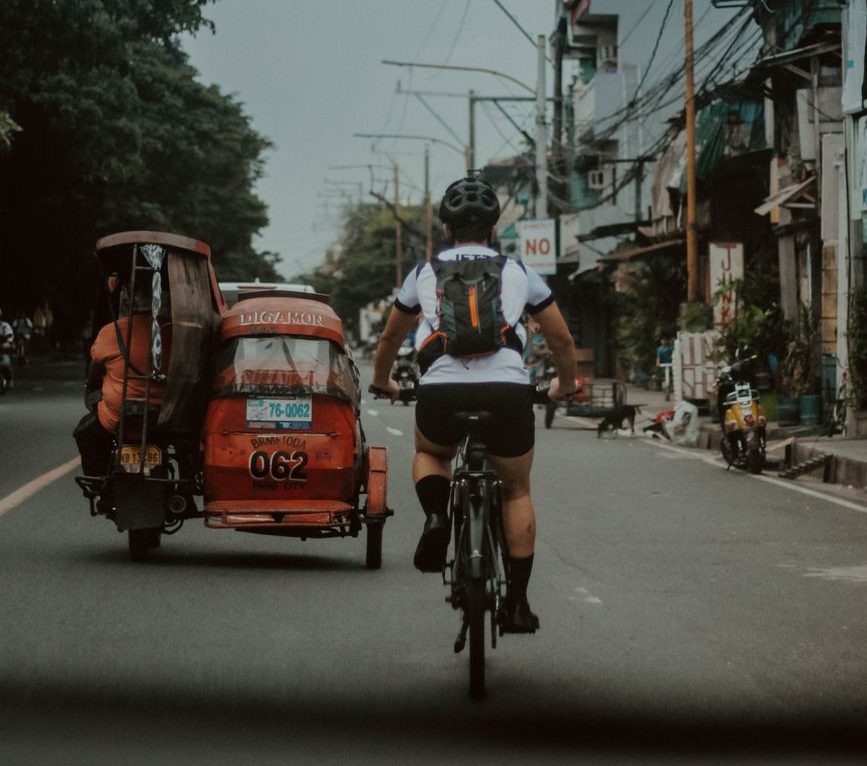
MANILA— The proportion of Filipino households with at least one member who uses a bicycle declined to 26% in June 2026, down from a peak of 36% three years earlier, according to a Social Weather Stations (SWS) survey.
The nationwide survey conducted from June 20 to 29 found that an estimated 7.3 million households had at least one member who cycled for any activity, lower than the 7.7 million recorded in March 2024 and 10 million in March 2023.
Despite the decline, the latest figure remained higher than the 24% recorded in May 2021.
SWS also reported that 23% of Filipino households, or approximately 6.5 million, owned bicycles as of June 2026. This was an increase from 16% in March 2024, although slightly below the 24% recorded in March 2023.
The ratio of bicycle-owning households to car-owning households reached 5:1, the highest recorded in the 26 surveys conducted by SWS since May 2020.
Among cycling households, 20% used their own bicycles, equivalent to an estimated 5.5 million households, while 7%, or 1.9 million, relied on borrowed bicycles.
The survey also showed that recreational cycling remained more common than cycling for essential activities, although participation in both categories declined compared with 2023.
About 19% of households, or 5.3 million, reported cycling for recreation, down from 27% in March 2023. Meanwhile, 17%, equivalent to 4.9 million households, used bicycles for essential activities, compared with 24% three years earlier.
Recreational activities included exercise, sightseeing and playing, while essential activities covered grocery and market trips, commuting to work, traveling to other destinations and livelihood-related activities.
Health, transportation cited as main reasons
Improving health emerged as the leading reason for cycling, cited by 35% of respondents from cycling households, equivalent to an estimated 2.6 million households.
Transportation, work and livelihood ranked second at 32%, or approximately 2.3 million households, followed by recreation and play at 20%.
Other reasons included saving on fares (12%), saving money (11%) and reducing travel time (7%).
The findings marked a shift from March 2024, when recreation and play was the leading reason at 49%, followed by saving on fares and transportation, work and livelihood, both at 27%.
Meanwhile, the absence of a bicycle remained the primary reason households did not cycle, cited by 53% of non-cycling households, or an estimated 11 million.
Other reasons included having alternative transportation (10%), lacking cycling skills (9%), fear of accidents (8%) and lack of interest (6%).
Majority see cycling as viable transportation
Despite the decline in cycling households, most Filipino adults continued to view bicycles as an effective means of transportation.
The survey found that 64% agreed that cycling was just as effective as other forms of transportation in reaching different destinations, while 24% disagreed and 12% were undecided.
A larger proportion, or 73%, agreed that more people would use bicycles for transportation if roads were safer. Only 16% disagreed, while 9% remained undecided.
Support for safer roads was particularly strong among cycling households, which registered a net agreement score of +72, compared with +52 among non-cycling households.
The survey also found that 11% of household members nationwide, equivalent to 13.1 million people, were cyclists. This was higher than the 10% recorded in March 2024 but below the 15% peak in March 2023.
Male cyclists continued to outnumber female cyclists, although the gap narrowed. The male-to-female ratio stood at 5:2 in June 2026, compared with 3:1 in both March 2024 and March 2023.
Those below 18 years old remained the largest age group among cyclists, accounting for approximately 33% of cycling household members.
The Second Quarter 2026 SWS survey involved face-to-face interviews with 1,200 adults aged 18 and above nationwide from June 20 to 29. It covered 300 respondents each from Metro Manila, Balance Luzon, the Visayas and Mindanao, with a sampling error margin of plus or minus three percentage points for national results.



Leave a Reply