
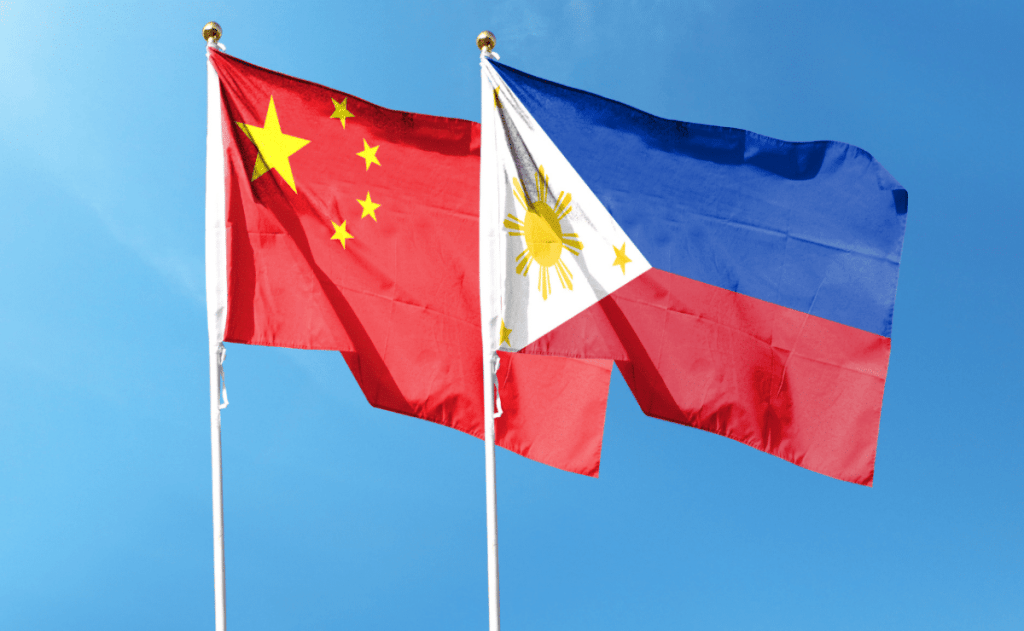
MANILA— Various business, labor, overseas Filipino worker (OFW), education, economic, agricultural and youth organizations have called on Philippine and Chinese authorities to ease diplomatic tensions and pursue renewed engagement, warning that escalating public exchanges could undermine economic cooperation and national interests.
In a joint appeal, the groups urged both sides to exercise restraint, avoid inflammatory rhetoric and address disagreements through established diplomatic channels instead of public recriminations and social media exchanges.
They said the Philippines needs a foreign policy that protects national sovereignty while maintaining economic stability, describing the country’s approach as one that must be “principled yet pragmatic, resolute yet diplomatic.”
The organizations cited data from the Philippine Statistics Authority (PSA) showing that China and Hong Kong accounted for nearly 30% of the Philippines’ international trade in recent years, including 26.3% of exports and between 27% and 29.5% of imports.
In comparison, the Philippines represents only around 0.3% to 0.5% of China’s total global trade, according to the appeal.
The groups noted that the two economies remain interconnected through trade, manufacturing, construction, infrastructure, agriculture, retail, energy, electric vehicles and solar panels.
They also pointed to China’s role as a supplier of essential goods, industrial inputs, machinery, electronics, strategic raw materials and renewable-energy technologies that support Philippine businesses, employment and consumers.
The organizations further emphasized the economic contributions of Filipinos working in China, Hong Kong and Macao, saying their remittances help support families, education, housing, healthcare and small businesses while strengthening the country’s foreign exchange earnings.
“Whatever our political differences or maritime disputes, constructive diplomacy and stable economic relations are essential to protecting livelihoods, maintaining investor confidence, controlling costs, accelerating clean-energy adoption, and sustaining development,” the appeal read.
The groups also urged the government to strengthen domestic industries and pursue strategic diversification while maintaining economic engagement with China.
They said the Philippines should improve its competitiveness in attracting regional tourism, investments, business travel and commercial opportunities, particularly amid geopolitical uncertainties, supply-chain disruptions and competition for foreign investments.
To achieve these objectives, the organizations outlined six recommendations for the government and other concerned parties.
These include exercising restraint in public statements, establishing a centralized and consistent foreign policy, and defending Philippine sovereignty under international law while preserving practical cooperation in trade, investment, tourism and energy security.
They also called for greater efforts to generate decent employment through market access, resilient supply chains, technology transfer, local production, clean-energy development and productive investments.
The groups said strategic diversification, including broader trading partnerships, stronger domestic production capacity and alternative sources of critical supplies, should complement rather than replace diplomatic engagement.
They likewise stressed the importance of mutual respect and responsible communication, urging both countries to resolve disagreements through sustained dialogue and appropriate diplomatic mechanisms.
“Constructive relations with China do not require abandoning Philippine sovereignty, overlooking legitimate concerns, or compromising an independent foreign policy,” the organizations said.
“Effective diplomacy means defending national interests while avoiding unnecessary escalation. Firmness and friendship, vigilance and cooperation, and national dignity and economic pragmatism can coexist.”
The appeal emphasized that economic stability and improved living conditions should remain central to the country’s diplomatic priorities, citing the need for secure livelihoods, affordable essentials, reliable agricultural and industrial inputs, investment, technology and energy security.
The groups urged Philippine and Chinese authorities to lower tensions and restore disciplined diplomatic engagement, saying the success of diplomacy should be measured by its ability to protect national interests, prevent conflict and create opportunities for Filipinos.
“For the Philippines, the path forward must be one of sobriety, strategic clarity, economic pragmatism, and constructive engagement with China and the wider international community,” the appeal said.
“Our national interest demands nothing less.”




Leave a Reply