
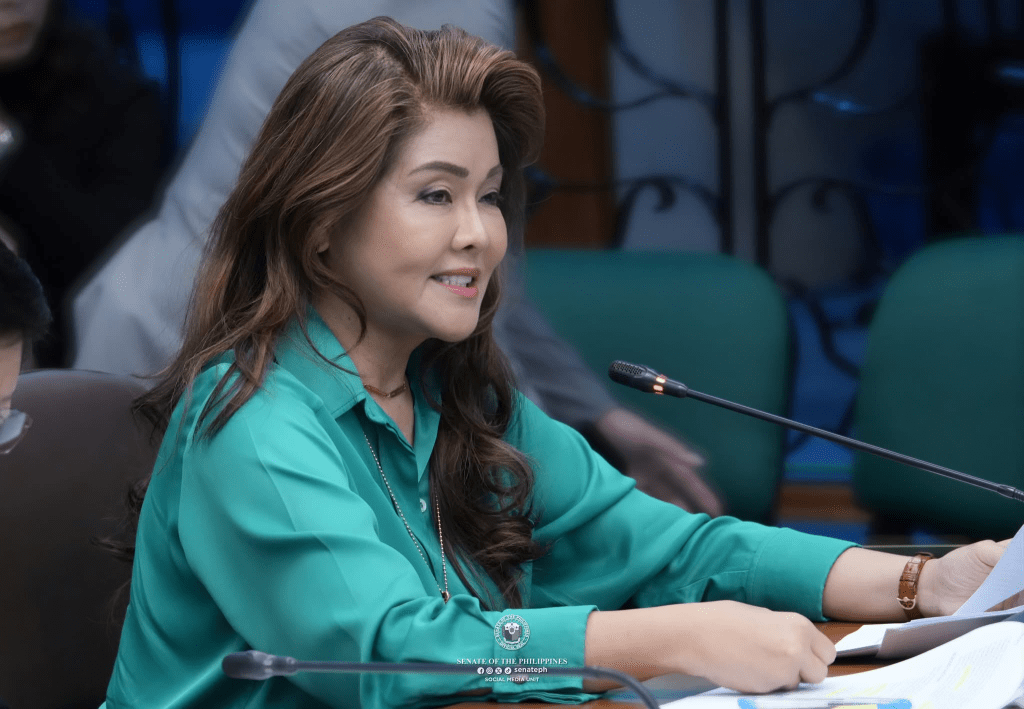
MANILA — Senator Imee Marcos called on the government to adopt direct government-to-government (G2G) oil procurement to cushion the effects of the ongoing global oil shock, criticizing what she described as a slow response from the administration.
Marcos said the government should negotiate directly with oil-producing countries and sell fuel at regulated prices to ease the burden on sectors most affected by rising costs, including transport workers, farmers, and fisherfolk.
“Why hasn’t there been a G2G deal with Russia during the sanctions waiver period? The waiver was even extended to May 16, yet the government has remained idle. Even Petron, a private company, was able to secure 2.48 million barrels of Russian crude. If a private corporation can do it, why can’t the Philippine government?” she said.
The senator cited past government efforts, noting that direct negotiations helped the Philippines manage previous oil crises in the 1970s.
“In the 1970s, the government didn’t just wait for the market to stabilize. We negotiated direct G2G oil imports at deeply discounted ‘friendly’ rates to abate the shocks of 1974 and 1979. This strategy worked then; why aren’t we doing it now?,” Marcos asked.
She also pointed to other countries that are actively securing supply through similar arrangements.
“Indonesia is planning to import 150 million barrels of Russian crude this year; Sri Lanka fast-tracked direct G2G deals to address fuel shortages; while Vietnam, Thailand, and Malaysia are actively negotiating supply and investment agreements with Russia and other exporters such as Brunei,” she said.
Marcos added that the Philippines should study how other oil-importing nations are addressing supply disruptions and diversify its sources.
“Our government must have a sourcing strategy beyond traditional routes vulnerable to disruption, particularly the Strait of Hormuz, by shifting to non-Middle Eastern suppliers. At the same time, we should strengthen direct partnerships with regional producers like Malaysia, Brunei, and Indonesia instead of relying heavily on intermediaries in refining hubs such as Singapore, South Korea, and China,” Marcos said.
“The Iran war is a crisis all too real for most Filipinos. Sadly, we are bereft of the strong, decisive leadership that should lessen our people’s burdens from a global oil shock that will take years to resolve.” she ended.
 Republika News
Leave a comment