
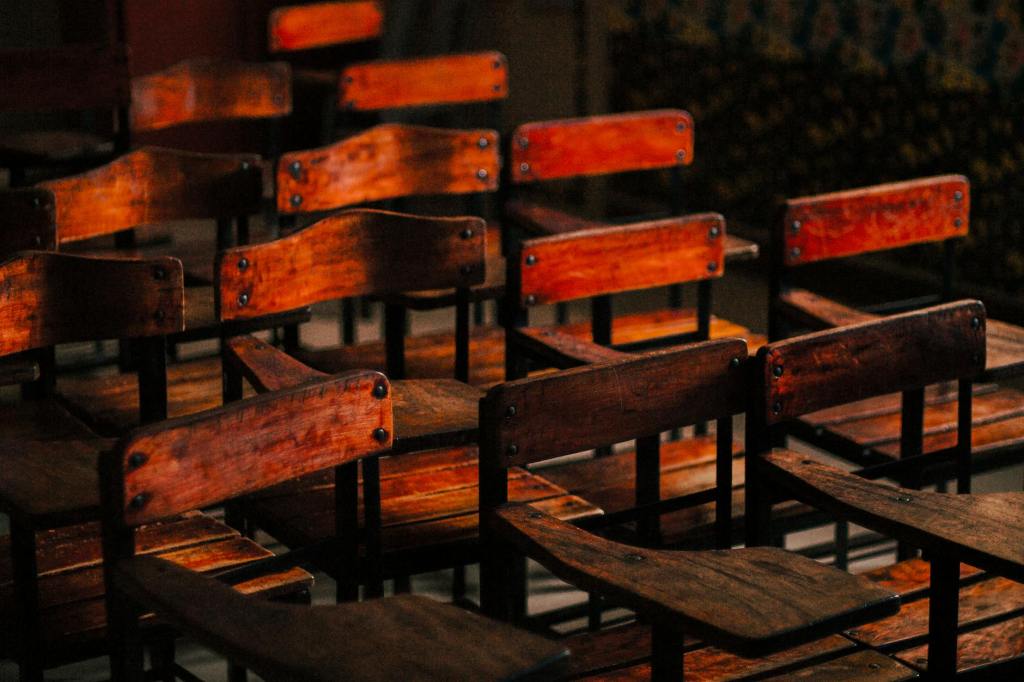
MANILA — The Department of Education said around 4.5 million struggling learners have shown improvement in literacy and numeracy under ongoing government learning recovery efforts in the basic education system.
Education Secretary Sonny Angara said the agency is implementing remediation and foundational learning interventions to strengthen employability outcomes of future graduates, in line with the directive of President Ferdinand R. Marcos Jr.
“Our goal is to strengthen the entire learning recovery pipeline, from the earliest grades through senior high [school], so that early literacy success translates into lasting proficiency and genuine readiness for the world beyond graduation,” Angara said.
The Department of Education said the improvement was based on end-of-school-year results from the Comprehensive Rapid Literacy Assessment (CRLA), Rapid Math Assessment (RMA), and the Philippine Informal Reading Inventory (Phil-IRI) for School Year 2025–2026.
Data showed that the number of struggling readers dropped to 2.2 million from 6.7 million at the start of the school year. These learners were identified as needing intervention in phonemic awareness, decoding, and basic comprehension skills.
Improvement was most evident among Grades 1 to 3 learners at 33 percent, followed by Grades 7 to 10 at 28 percent, and Grades 4 to 6 at 16 percent.
The number of “grade-level ready” readers also increased to 5.8 million from 3.3 million during the same period.
In Mathematics, the number of “not or low proficient” learners dropped nearly by half, falling to 6.8 million from 13 million across all grade levels.
The agency also reported decreases in “emerging learners,” with reductions of 46 percent in Grades 1 to 3, 44 percent in Grades 4 to 6, and 18 percent in Grades 7 to 10.
Angara said the department will continue strengthening interventions, particularly for secondary education levels, to sustain gains in learning recovery.
“We will continue to refine these interventions to ensure that the progress we see in the early years is sustained through the secondary levels, equipping our high school learners with the analytical skills they need for the future,” he said.
He also emphasized that improving classroom instruction remains essential alongside recovery programs, especially as the education sector prepares for a shift to a three-term academic calendar.

 Republika News
Leave a comment