
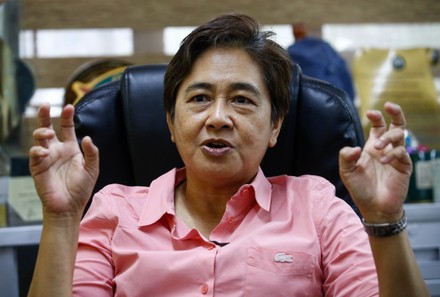
MANILA — Bodies of individuals killed in a firefight between government troops and rebels in Negros Occidental were allegedly mishandled, with one even released to the wrong family and some personal items missing or mislabelled, according to University of the Philippines professor and forensic pathologist Dr. Raquel Fortun.
In a report, Fortun made the disclosure as she presented preliminary autopsy findings on five of the 19 fatalities from the April 19 incident. The bodies were later brought to Manila by relatives and lawyers for independent examination.
“We’re talking of bodies that are not well preserved,” Fortun said in a briefing.
She said she was only provided two bags of clothing for the five bodies she examined, one of which was labeled with the wrong name.
Fortun said her findings remain preliminary pending completion of a final report, adding that she had requested access to all 19 bodies but was only allowed to examine five. She said at least 13 cases should ideally be reviewed, though some remains had already been cremated.
Describing the incident as a possible “mass casualty incident,” Fortun said three of the five bodies she examined had multiple gunshot wounds, with several bullets recovered.
She also noted inconsistencies in the handling and documentation of remains, which in one case led to a body being released to a family under the identity of their missing relative, identified as Errol Wendel.
Fortun said comparisons of height, dental features, scars, and clothing led her to conclude that the body did not belong to Wendel.
“Everything was off. The body length didn’t match his height. The teeth didn’t match. The scars didn’t match,” she said.
“The clothes—I don’t know if those were really his clothes—[the relative said] ‘My brother wouldn’t wear something like that,’” she added.
She said the remains were later classified as an unidentified adult male, while Wendel’s whereabouts remain unknown. Fortun also said relatives were never shown the face of the body nor informed of the basis for identification.
“They were never shown the face. They were never told what was the basis (of identification). They were just told that is our missing relative, and it was released to them,” she said.
Fortun appealed to families who may have already buried or cremated remains to come forward to help locate Wendel, and urged relatives to delay cremation of the remaining bodies to allow further examination.
“Who decided back in Negros who these people are? So [that is] the question,” she said.
She also raised concerns about the recovery and documentation process.
“The clothes were taken, and someone told me they [relatives] were only given numbers and names. Was there anything done to document to make sense of this body?” she said.
Fortun stopped short of concluding whether the killings were unlawful but said several findings raised questions that did not fully align with the military’s account of an armed encounter.
She pointed out that some victims had gunshot wounds to the back.
“Bakit ang mga tama nila ay nasa likod kung confrontation iyan (Why do they have wounds at the back if it was a confrontation)?” she asked.
She also cited inconsistencies in military-released images of bodies allegedly in combat gear. In one case, she said an ammunition pouch recovered from a body retrieved from water was empty.
“Wala naman laman,” she said.
Fortun added that in previous cases, she had seen discrepancies between photographed gear and wound patterns, noting: “Kung may tama siya doon at suot niya ‘yung vest, eh may butas din si vest (If the person was shot through a vest, there should be a hole in the vest).”
One of the most troubling cases she cited involved a woman who sustained four gunshot wounds, including a fatal shot to the leg that severed an artery and vein.
“So ang tanong doon is, teka muna, hindi ba ‘yan war crime? Kasi injured, dapat attended ito,” she said.
“Ibig sabihin nagdugo sya sa scene. Wala kayong ginawa,” she added.
She also noted another case where a victim appeared to have aspirated blood after sustaining a wound to the airway.
Fortun further raised concerns about death certificates issued in Negros Occidental, saying some listed no cause of death while others used only generic descriptions such as “gunshot wounds at the head/trunk.”

 Republika News
Leave a comment