
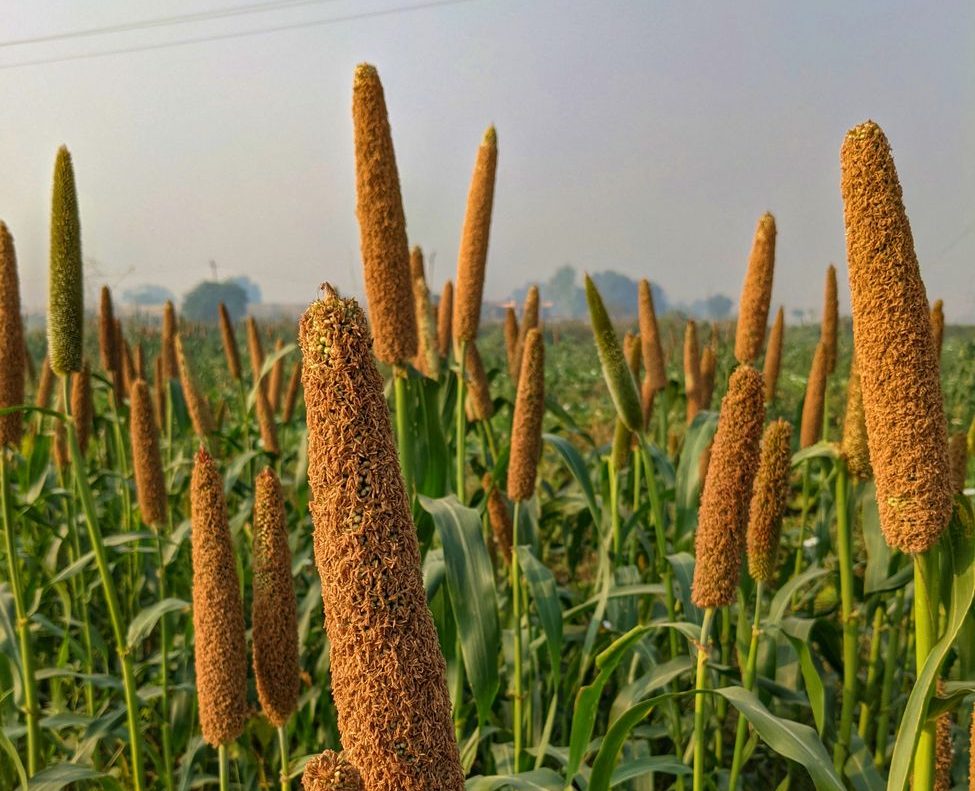
MANILA — The Department of Agriculture (DA) is exploring millet as an alternative to corn for animal feed as it seeks to lower livestock production costs and reduce the sector’s exposure to weather-related disruptions in feed supplies.
Agriculture Secretary Francisco P. Tiu Laurel Jr. examined millet and other feed ingredients during a recent visit to India, where the drought-tolerant crop is widely used. The experience could provide lessons for Philippine livestock producers.
Millet is a group of small-seeded cereal grasses used for food and animal feed. It can grow under relatively dry conditions and generally requires less water than corn, making it a potential alternative when drought affects conventional feed crops.
Corn remains a major feed ingredient, making livestock producers vulnerable to supply disruptions and higher input costs. The commercial use of millet, however, would depend on its yield, nutritional value, processing requirements and cost.
The initiative forms part of the DA’s broader efforts to strengthen the domestic livestock and dairy industries, including through the Philippine Carabao Center’s development of local breeding technologies.
The PCC has launched a P237.9-million facility housing what it describes as the world’s first laboratory dedicated exclusively to sex-sorting buffalo semen.
Using flow cytometry, the laboratory separates sperm carrying X and Y chromosomes with about 90 percent accuracy, allowing breeders to target female offspring for dairy production or males for meat and draught work. The sorted semen is cryogenically preserved for artificial insemination programs nationwide.
The PCC aims to produce about 170,000 sex-sorted semen straws annually, primarily to increase female offspring and expand the country’s dairy herd.
The program seeks to address the Philippines’ domestic milk supply gap, with local production currently meeting less than 5 percent of national demand.
Producing sex-sorted semen locally could also reduce procurement costs and reliance on foreign breeding material while providing livestock producers with breeding stock better suited to Philippine conditions.
Tiu Laurel said expanding domestic capacity to produce and process feed is crucial to strengthening the livestock sector.
“When communities can grow, process, and mill their own feed, we lower costs, raise productivity, and make our food system more resilient,” he said.
The DA’s initiatives on millet and buffalo breeding are part of efforts to address livestock production constraints by developing alternative feed sources and expanding domestic milk and meat production.





Leave a comment